Finding shark teeth isn't just about luck. Once you know what to look for and how to scan the beach, you'll start spotting teeth that most people walk right past. If you've ever watched an experienced fossil hunter fill a bag while you can't seem to find a single tooth, chances are they're using a better search technique—not better eyesight.
Here's how to scan a beach the right way.
Don't Look Too Far Ahead
One of the biggest mistakes beginners make is looking 15 or 20 feet in front of them. Instead, keep your eyes focused about 2 to 4 feet ahead. This gives you enough time to notice small details without your eyes constantly jumping around. If you're looking too far away, shark teeth become tiny black specks that blend into the environment.
Scan Side to Side, Not Randomly
Rather than letting your eyes wander, imagine mowing your lawn. Start on one side of your path and slowly scan to the other before taking a few more steps forward. Then repeat. This simple pattern helps ensure you don't miss sections of beach or accidentally search the same area twice. A slow, methodical search almost always beats walking quickly and hoping a tooth catches your eye.
Train Your Eyes to Look for Shape First
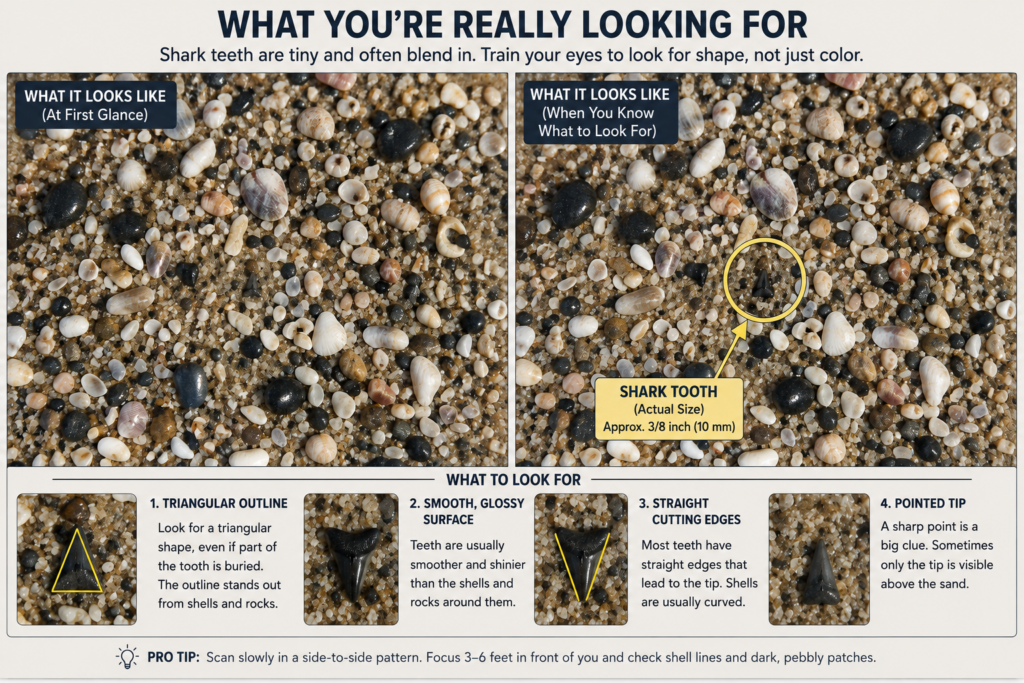
Many people think they're searching for black objects. And to be fair, most fossil shark teeth you'll find on the beach are black or very dark. But experienced hunters aren't really looking for color - they're looking for shape. A shark tooth may be a wide range of colors: black, gray, brown, tan, or even cream-colored depending on how it became fossilized. Color alone isn't reliable. Instead, look for:
• A sharp triangular outline
• Smooth, glossy surfaces
• Straight cutting edges
• A pointed tip
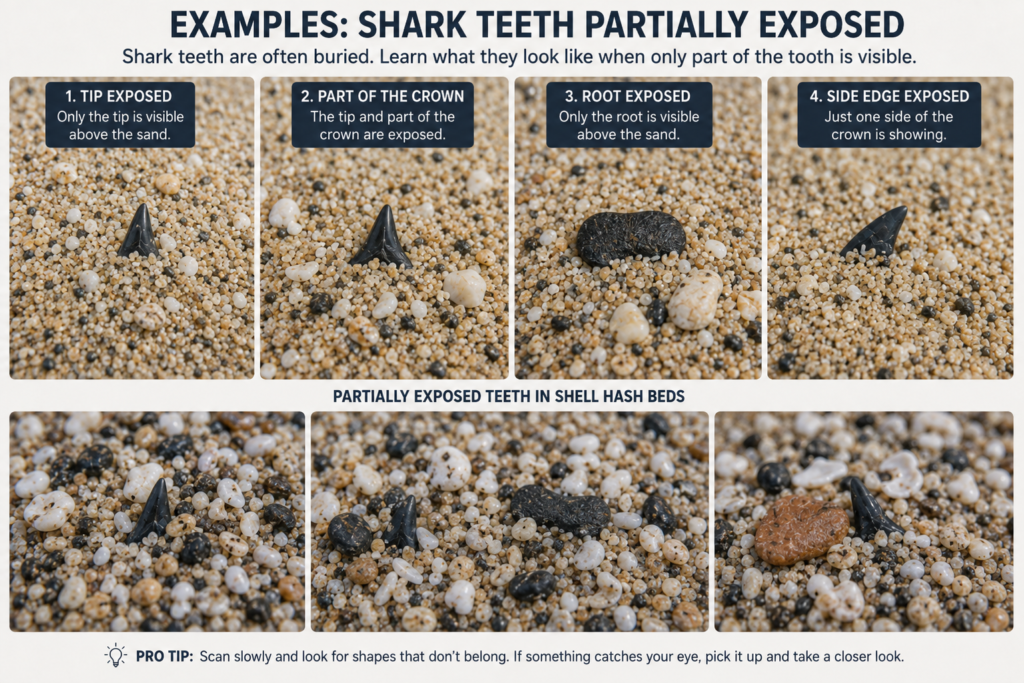
Even if only part of the tooth is visible, the shape often stands out before the color does.
Check Shell Lines and Pebble Patches
Not every part of the beach has the same chance of producing shark teeth. As waves move sand around, they often leave behind heavier material like shells, small rocks, phosphate pebbles, and fossil fragments. Shark teeth tend to collect in these same areas. When walking the beach, pay extra attention to:
• Shell lines left behind by the previous high tide
• Dark patches of coarse material
• Areas with black phosphate pebbles
• Places where shells, gravel, and heavier debris have accumulated
These spots often produce far more teeth than wide stretches of clean sand.
Look for What Doesn't Belong
Your brain is naturally good at spotting objects that look out of place. As you scan the beach, don't try to inspect every shell or pebble individually. Instead, let your eyes look for anything that breaks the pattern around it. A smooth triangular object among broken shells or rounded pebbles often deserves a closer look (see example below). Even experienced hunters regularly stop to inspect objects that turn out to be shells or rocks—but that's part of the process. If something catches your attention, pick it up. It's much better to examine a few extra shells than to walk past a shark tooth
Slow Down
Most first-time hunters simply walk too fast. A difference of just a few seconds between steps gives your brain time to recognize shapes hiding among shells and rocks. It's common to walk right past a tooth, only to spot it immediately when turning around and approaching from a different angle. If an area looks promising, don't be afraid to slow down or even search it twice.
Practice Makes Your Eyes Better
The more shark teeth you find, the easier they become to spot. After you've picked up a few dozen teeth, you'll notice your brain begins recognizing their shape almost automatically. Many experienced collectors describe this as developing an "eye" for shark teeth—but it's really just practice. The good news is that anyone can learn it.
Final Thoughts
Scanning a beach for shark teeth is a skill that improves with every hunt. Walk slowly, scan in a consistent pattern, focus on shape instead of color, and spend extra time searching shell lines and areas with heavier material. Before long, you'll start seeing shark teeth that you would have walked right past on your first trip. The best beach hunters aren't usually the luckiest—they're simply the most patient.