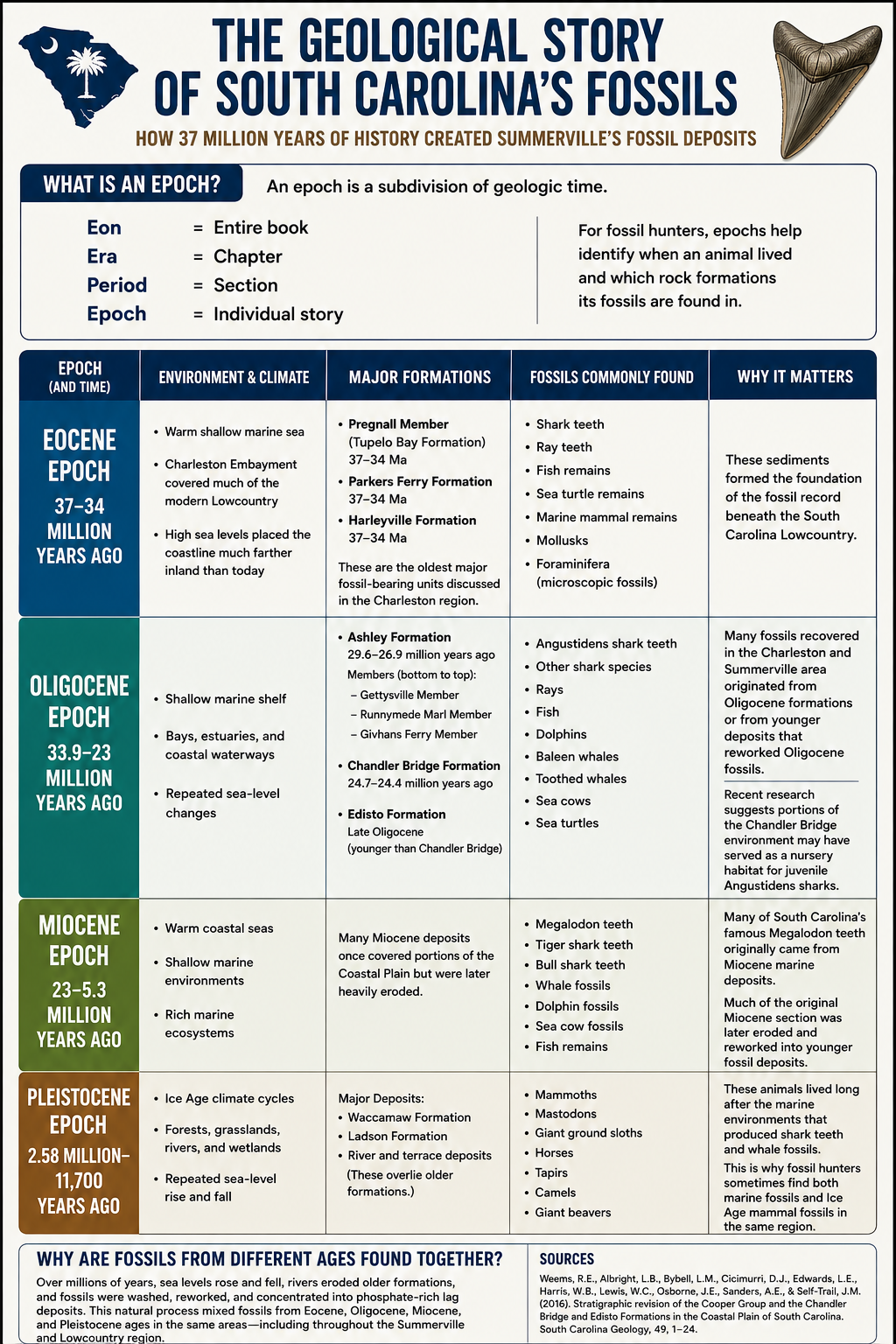
The Lowcountry of South Carolina's fossil-rich landscape offers countless opportunities for discovery, but knowing where to start can be overwhelming. From beachcombing along the Atlantic shoreline to exploring creeks, riverbanks, and historic fossil-bearing deposits farther inland, this guide covers the most common fossil hunting environments in the region, tips for finding productive locations, and the laws and ethics every collector should understand before heading into the field. No matter your experience level, understanding the landscape is the first step toward a successful fossil hunt.
New to Shark Tooth Hunting?
If you're just getting started, check out our Beginner's Guide to Shark Tooth Hunting in the South Carolina Lowcountry first. It covers the basics of where to hunt, how to search, what to bring, and more.
Oceanfront Shark Tooth Hunting
Introduction
While much of the Lowcountry's fossil hunting occurs inland, South Carolina's beaches and barrier islands can also produce shark teeth and other fossils. Areas near inlets, tidal creek mouths, and actively eroding shorelines can be particularly worth exploring because tides and currents continually move and redistribute sediment along the coast.
Beach productivity can change considerably over time as storms, erosion, dredging, and beach renourishment expose or bury fossil-bearing material.
Where to Search
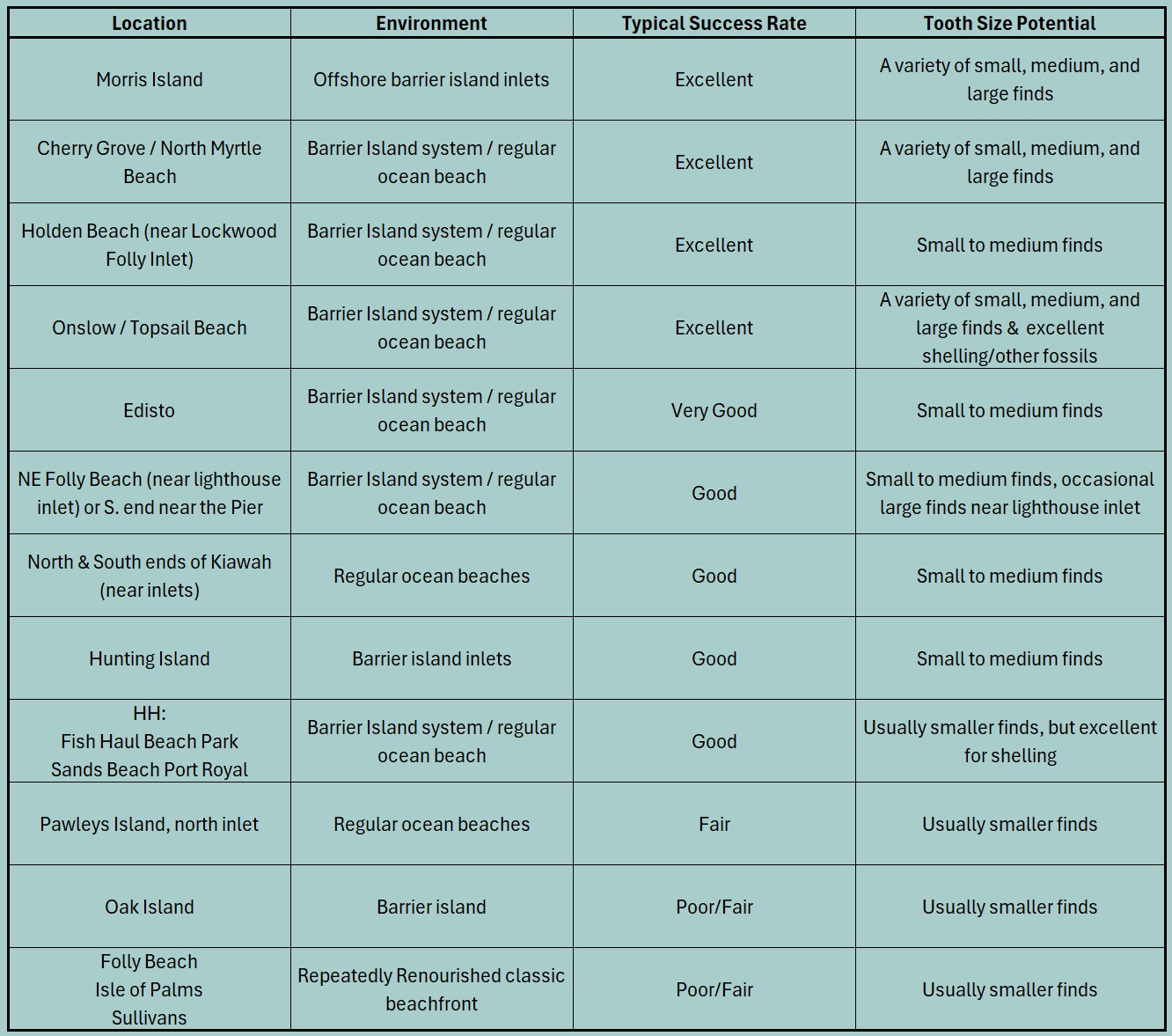
Not every beach is equally productive for shark tooth hunting. Some stretches of coastline regularly produce fossils, while others may have very little exposed fossil material. Choosing a beach with a known history of shark tooth finds is one of the best places for a new hunter to start. The location chart below provides several options and a general idea of what you can expect at each.
In general, beaches near inlets and tidal creek mouths can be especially productive because strong currents move and redistribute sediment. Areas experiencing active erosion may also expose older material that would otherwise remain buried beneath the sand. Dredging and beach renourishment can affect fossil hunting as well, sometimes exposing or introducing fossil-bearing material and other times covering productive areas with new sand.
Keep in mind that coastal conditions are constantly changing. A beach known for shark teeth won't produce everywhere or on every visit, but starting with a beach that has demonstrated fossil potential gives you a much better place to begin.
Updated June 2026: The information in the chart below is based on publicly available reports and observations from shark tooth hunters in the field. Conditions and productivity can change over time.
Isle of Palms Update: IOP is undergoing a major beach renourishment project during the summer and fall of 2026. Read more about the project and what it could mean for fossil hunting here!
Where to Focus on the BEach
Even on a productive beach, fossils are rarely distributed evenly. Once you've chosen a location, focus your search around features that naturally concentrate heavier material:
Where to Look:
• Tidal creek mouths and inlet-adjacent shorelines
• Shell lines and shell beds
• Cuts, troughs, and low spots where heavier objects settle
• Exposed shell hash, gravel, or dark sediment
• Areas around Jetties (can help expose or concentrate shells, fossils, and other sea debris)
Even productive beaches don’t produce finds everywhere you walk. Success comes from repeatedly checking the same types of features described above and paying attention to how your local beach changes after tides and storms.
Inland Shark Tooth Hunting
Introduction
If you're new to shark tooth hunting in the Lowcountry, you'll quickly discover that hunters are protective of productive locations. Specific creek and inland hotspots are rarely shared publicly because increased traffic can quickly lead to overhunting, overcrowding, and damage to the surrounding landscape.
Rather than sharing private or lesser-known hotspots, this section will help you understand the types of inland locations worth exploring and how to recognize areas with fossil potential. A few well-known public locations are also included below to help new hunters get started.
creek / Drainage ditch hunting
The Summerville area is well known for inland shark tooth hunting. Many local creeks and drainage systems cut through fossil-bearing sediments deposited when the Lowcountry was covered by shallow seas millions of years ago. As these sediments erode, shark teeth and other fossils can be released and concentrated in creek bottoms.
Not every creek will produce fossils. Gravel beds, shell material, phosphate nodules, and exposed fossil-bearing sediments can all be signs that an area is worth exploring. Some productive layers may also lie beneath the creek bed rather than being visible along the banks, so a creek shouldn't necessarily be dismissed simply because obvious fossil material isn't exposed.
How to get started:
Step one: Finding a creek
Maps can help identify creeks and drainage systems to explore, although many smaller waterways and drainage ditches may not be clearly marked and will require some scouting on foot.
Step Two: Get out on foot and survey creeks
Once you've identified a creek or drainage system, look for signs that it may be interacting with fossil-bearing sediments. Natural gravel beds, shell hash, phosphate nodules, and exposed layers of clay or sediment can all be encouraging signs.
Fossils released by erosion are often carried downstream and concentrated with gravel and other heavier material, so the fossil-bearing layer itself may not be visible where you find the teeth. Likewise, a sandy or vegetated creek bank doesn't necessarily mean the creek is unproductive.
The only way to know for certain is to explore the area and look for fossil material.
PLEASE NOTE: Be mindful of where you are surveying and get permission to enter land as necessary. Fossil collecting is prohibited in some protected areas (ie: state historic sites, heritage preserves), and collecting fossils from South Carolina waterways may require a hobby license. See the Local Laws and Ethics section before heading out.
River hunting
Our recommendation depends on whether you are a diver or non-diver.
Divers:
The Cooper River is where you want to go. No question. It is widely considered South Carolina's premier destination for fossil diving as most of the large megalodon teeth, even museum-quality teeth, come from the bottom of the Cooper. Ancient river currents have concentrated shark teeth and other fossils into gravel beds along the river bottom, giving divers the best opportunity to recover large and exceptionally preserved specimens.
Know before you go: Diving the Cooper is considered black water diving. Visibility is often limited and diving conditions can be challenging (strong current, varying depths, flowing debris).
Non-Divers:
The Ashley River and surrounding tidal creeks are excellent options. Exposed riverbanks, creek bottoms, and fossil-bearing sediments can often be searched on foot or by kayak during low tide. While giant megalodon teeth are less common than those recovered by Cooper River divers, these locations offer easier access and provide a great opportunity to find a variety of shark teeth and other fossils without scuba diving (the Cooper generally offers fewer productive/accessible opportunities for bank hunting than the Ashley).
Construction Sites
Construction sites have potential to be great hunting grounds as excavation often cuts directly into fossil-bearing formations such as the Ashley, Chandler Bridge, and Goose Creek formations.
You must get permission from the property owner or contractor to hunt the property. Entering without permission is trespassing.
Private Property
If you own land or have the owner's permission, you can generally dig for and collect fossils on private property (which you cannot do on public property). However, when it comes to waterways that cut through private property, the rules can vary. South Carolina treats many rivers, creeks, and canals as state waters and state jurisdiction generally extends to navigable and formerly navigable waterways even when they flow through private property. This would mean no digging into said creeks, and surface collection only.
A great option for folks interested in digging as opposed to creek hunting would be a guided dig. There are a few services in the Lowcountry where you can pay for a guided dig excursion on private property, but it isn't cheap.
A few commonly known spots to start
If you're looking for an easy place to begin, there are a few well-known public areas around Summerville where shark teeth and other fossils are regularly found. These locations receive plenty of hunting pressure, so expectations should be reasonable, but they can be excellent places for a new hunter to learn what to look for. Large or exceptional finds are less common at heavily hunted public locations, but smaller shark teeth, ray plates, vertebrae, and other fossils can still be found.
• Sawmill Branch Creek - Public, with plenty of access points parallel to the Sawmill Branch trail. A popular spot being behind the Oakbrook YMCA in Summerville
• Doorchester Creek - Common access point at the west end of the big lots parking lot near KFCC
Local Laws and Ethics
Know before you go (South Carolina specific)
1) A state hobby license is required before collecting any fossils in public waterways
• This is most relevant for folks collecting in river bottoms, creek beds, and submerged areas. You are free to collect above the low water mark, but any collection occurring under water requires licensing.
2) Digging or the use of tools for collecting is prohibited
• Collection must occur with your hands only. People will often use their hands to sift through gravel beds or load a sifter in a creek. But you may not use the sifter to scoop creek beds.
• The use of any tools such as shovels or screwdrivers is also prohibited on public grounds, and can earn you a large fine as digging into the banks of creeks causes damage and premature erosion
3) Surface collecting on public beaches is generally free and unrestricted
• Do not dig large holes, disturb dunes, or enter protected areas.
• Some beaches and wildlife sanctuaries have additional restrictions.
4) Respect the environment and the folks around you!
• Leave beaches, creeks, and rivers better than you found them
• If it came with you on your hunt (wrappers, bottles, bags etc.) make sure it leaves with you
Lastly, laws can change so it is important for readers to verify local regulations themselves
Ready to start exploring? Check out our Formation Guide to learn which fossil-bearing deposits are found throughout the South Carolina Lowcountry and how they shape the fossils discovered today.